

About Us
Monitoring, Protecting, and Understanding Loons on the Gunflint Trail
Each spring, Common Loons return to the lakes of the Gunflint Trail to nest, raise their young, and fill the Northwoods with their distinctive calls. These lakes are more than a summer destination — they are shared habitats where wildlife and people meet.
The Chik-Wauk Loon Program exists to help ensure loons continue to thrive here, now and into the future.
The mission of the Chik-Wauk Loon Program is to monitor trendssupport the loon population on the Gunflint Traileducate the broader community about loon awareness
The mission of the Chik-Wauk Loon Program is to monitor trends and support the loon population on the Gunflint Trail and surrounding lakes, while educating the broader community about loon awareness.
Why Loons Matter
Loons are one of Minnesota’s most recognizable and beloved species, but they are also highly sensitive to environmental change and the population has been declining. Because loons nest close to shore, rely on clear water to hunt, and are vulnerable to disturbance and pollution, their success reflects the overall health of the lakes.
Protecting loons helps protect the entire lake ecosystem — and the quiet, wild character of the Gunflint Trail.
Monitoring The Lakes
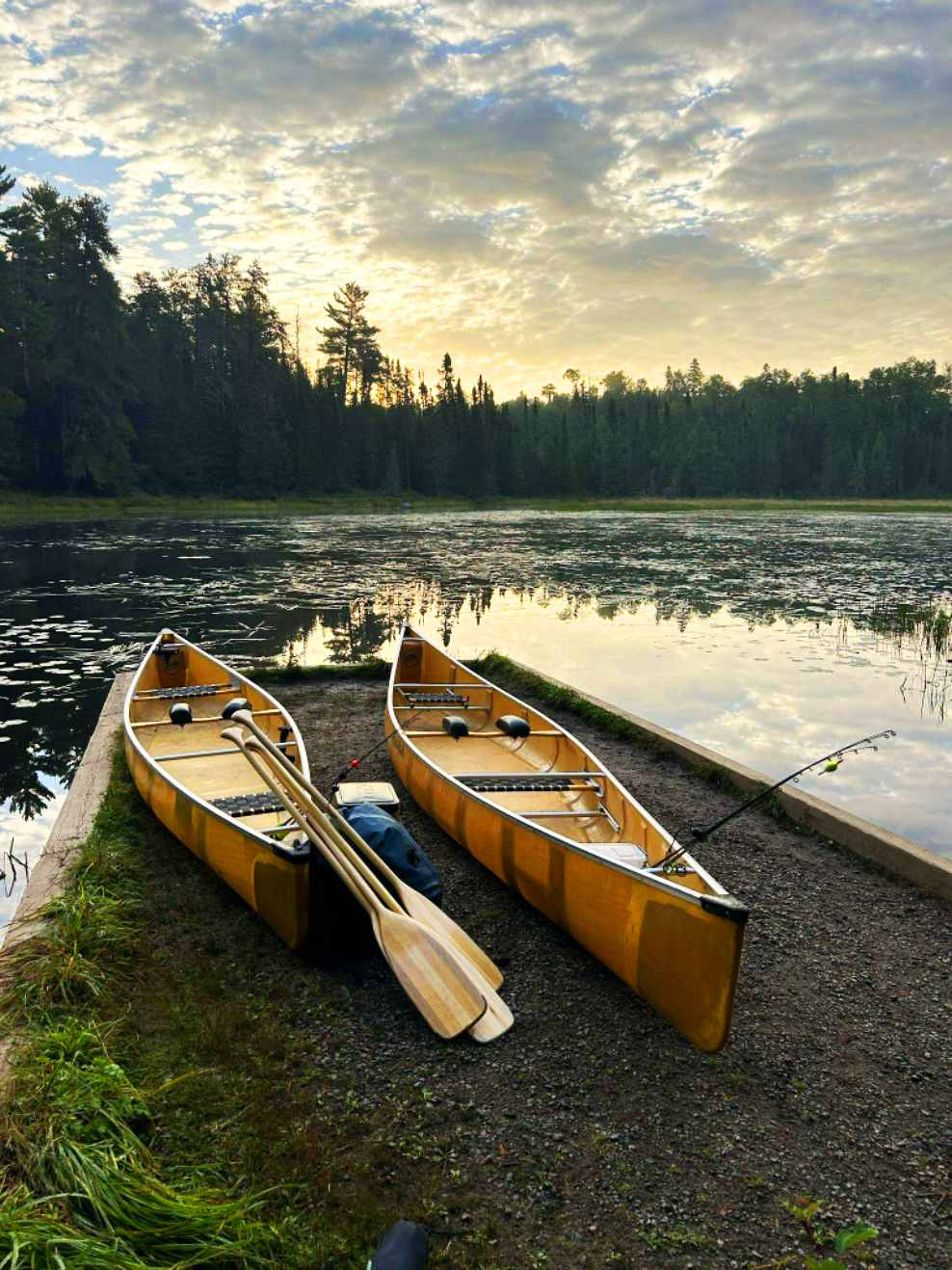
The Gunflint Trail and surrounding lakes provide prime loon habitat, with interconnected lakes that support nesting pairs and chick rearing throughout the summer.
The Chik-Wauk Loon Program works with trained Loon Rangers and volunteer lake monitors who observe loon activity during the season, including:
- Nesting and hatching
- Chick development
- Seasonal behavior and migration timing
- Potential disturbances or threats
This community-based monitoring helps establish long-term trends while encouraging shared stewardship of the lakes we love.
Loon Rangers & Community Observations
Loon Rangers are volunteers who spend time on the water observing and recording loon activity. Their work is strengthened by community members — cabin owners, visitors, paddlers, supporters and anglers — who share what they see.
You don’t need to be an expert. Simply paying attention and reporting your observations helps expand the understanding of loon activity across the Trail.
Seen a loon? Tell us what you observed.
Understanding Loon Behavior
Knowing what loons are communicating helps everyone share the water more safely. Click below to hear different loon calls.
Wail
Long-distance communication used to maintain contact between mates or chicks.
Yodel
A territorial call made only by males; each vocalization is unique to the individual.
Tremolo
An alarm call signaling stress or disturbance. It is often described as a "laughing" sound. If you hear a tremolo call, it’s a sign to give loons more space.
Hoots
Soft, short notes to keep loons in contact with each other. Hoots may be given from parents to chicks, or between parents.
Nesting
From May through July, loons are highly vulnerable. Disturbance can cause parents to abandon eggs or leave them exposed to predators.
Diving
Loons are master fishers, capable of diving more than 200 feet deep to catch a meal.
Head Down
If you see a nesting loon tuck its head down low, it feels threatened. You should immediately back away to prevent them from abandoning the nest.
Loon Chick Development
From Nest to Migration
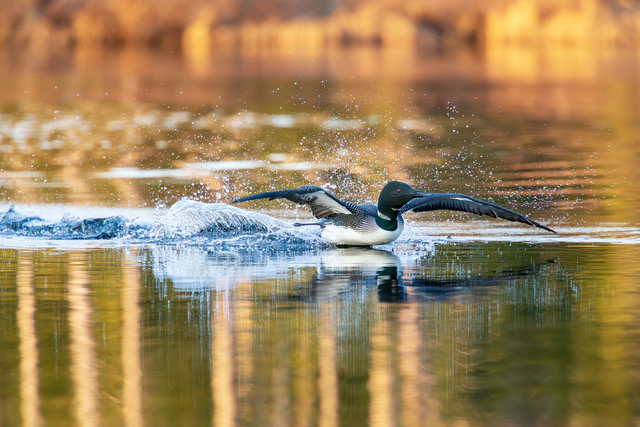
- The Return: As lakes begin to thaw, loons make their return to nesting territories, with dominant adults arriving first. Nesting is closely tied to ice-out conditions. The Chik-Wauk loons are typically the earliest nesters of the season. While Saganaga Lake may still be ice-covered, the sheltered bay that hosts the nest usually opens up first, often by early May.
- Nesting: Loons lay 1–2 large, olive-brown eggs in nests built right at the water's edge, as loons cannot walk well on land.
- The Wait: Both parents share incubation duties for 26–28 days, keeping the eggs at a steady temperature.
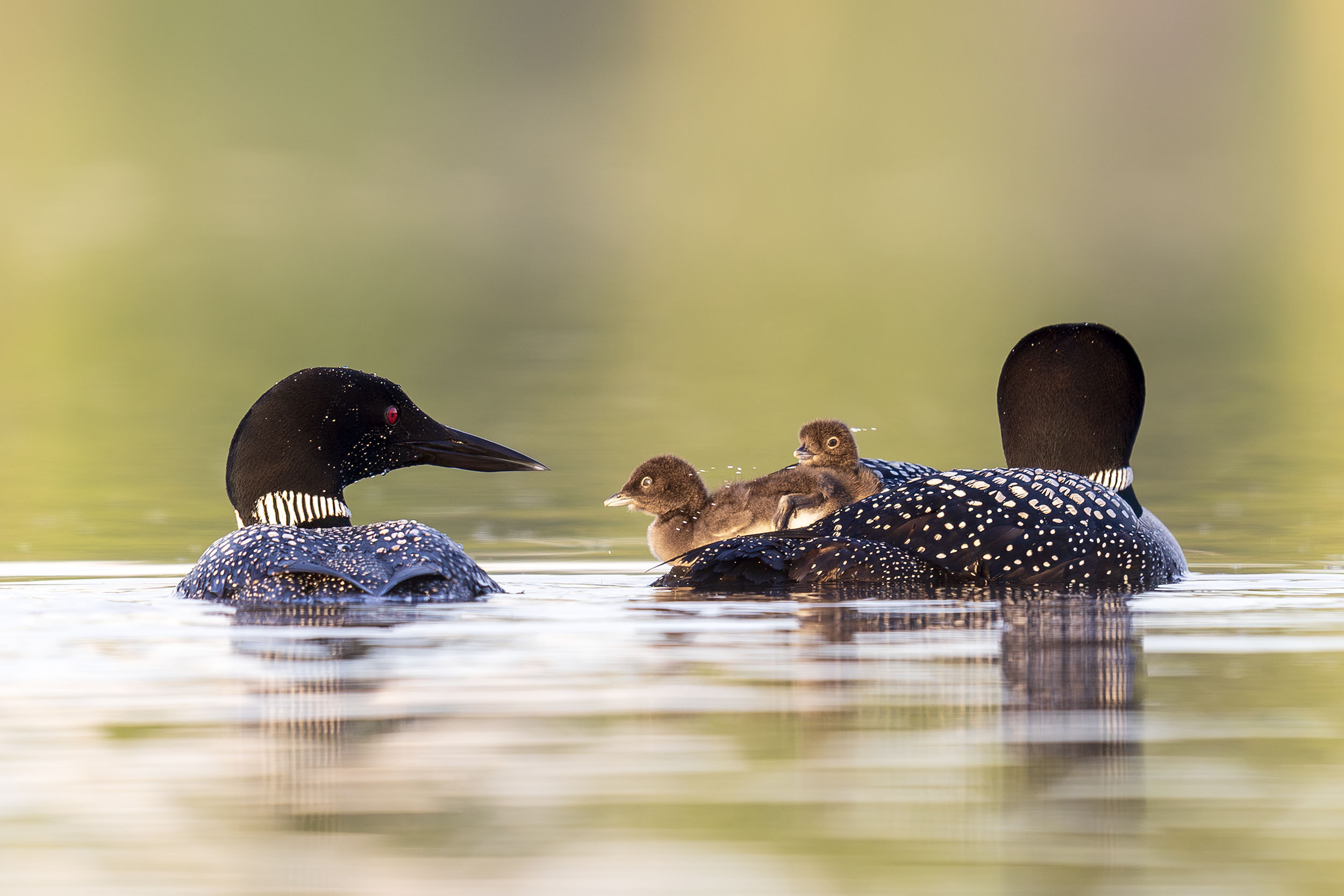
- Hatching: Chicks are "precocial," meaning they can swim almost immediately after hatching, but they are covered in brown down and can easily get waterlogged or chilled.
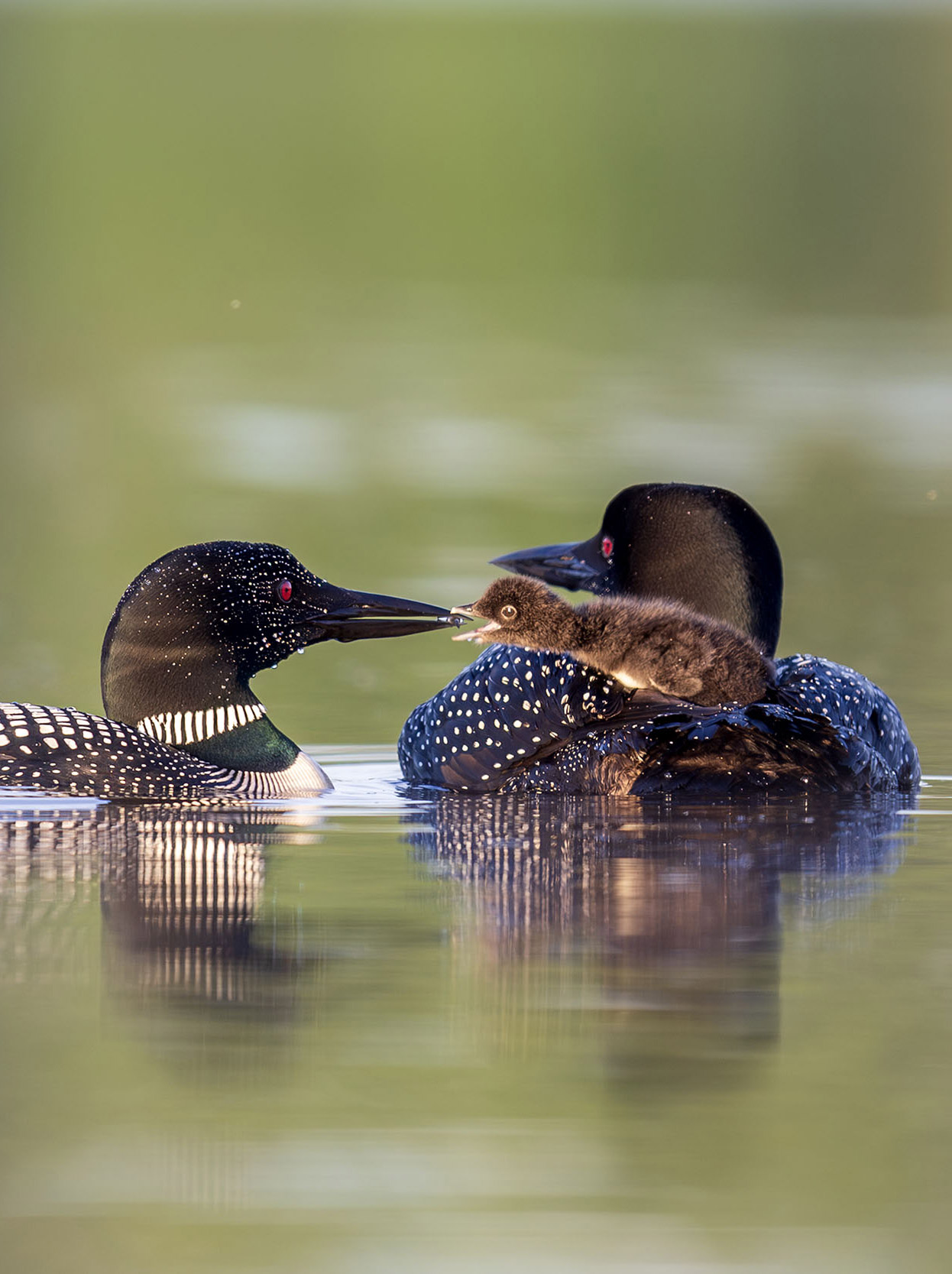
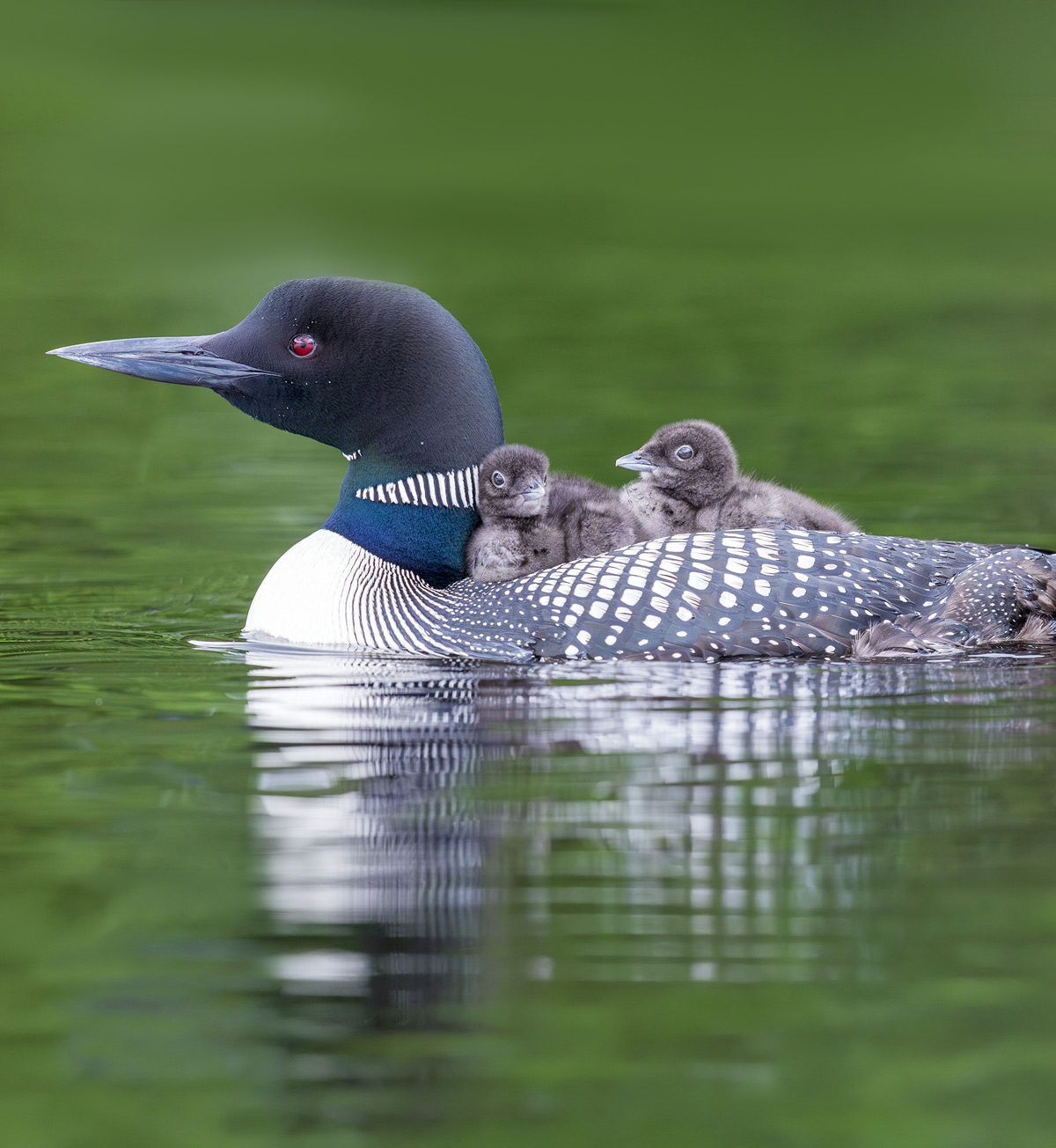
- The Hitchhike: For the first 10–14 days, chicks spend about half their time riding on a parent's back.
-
- Thermoregulation: Keeping them warm against the cold lake water.
- Protection: Keeping them out of reach of aquatic predators like large fish or snapping turtles. Important rest happens for young loons on parents' backs. During stormy weather the chicks often snuggle into the parent's back feathers or under their wings to prevent hypothermia
- Feeding: Parents feed the chicks small minnows, insects, and leeches.
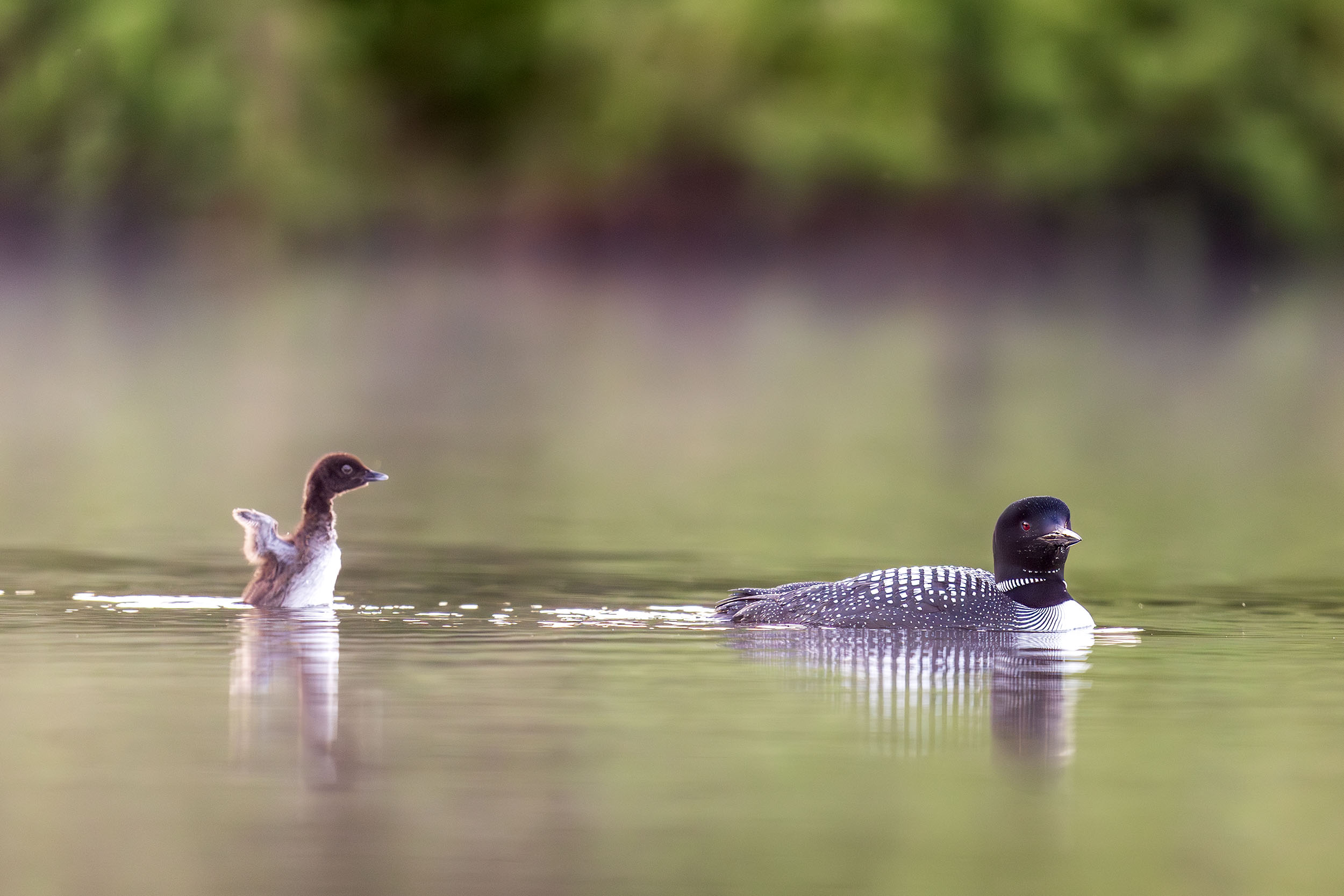
- The "Teeny-Bopper" Stage: By 3–4 weeks, chicks are too big to ride on backs. They begin to dive, though their initial attempts are buoyant and awkward.
- Changing Colors: Their dark brown down begins to transition into a sleek, gray juvenile plumage.
- Socializing: You may see "social gatherings" where loons from neighboring territories gather on the lake, though the parents remain protective of their specific brood.
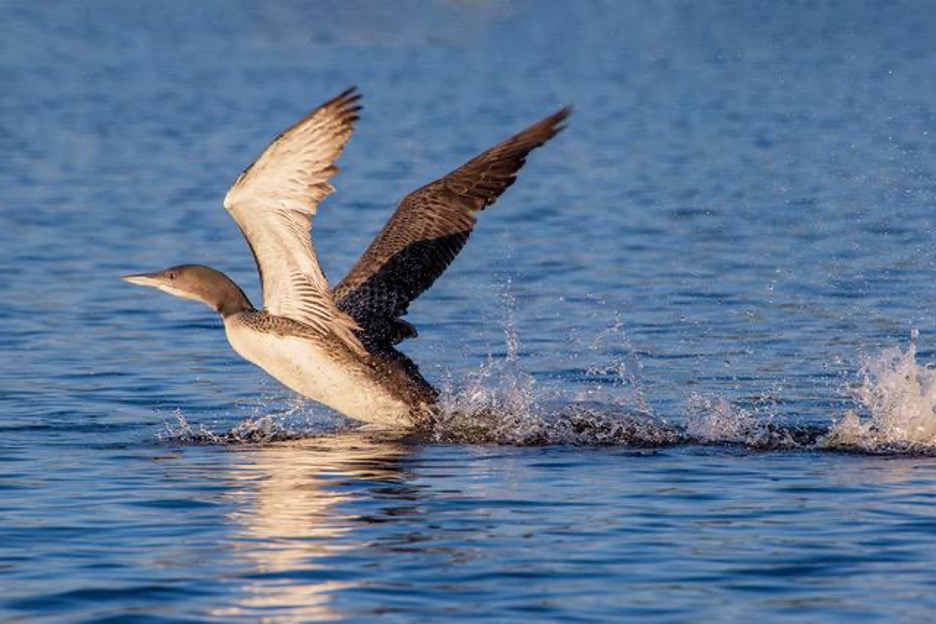
- Self-Sustaining: By mid-to-late August, chicks are catching most of their own food.
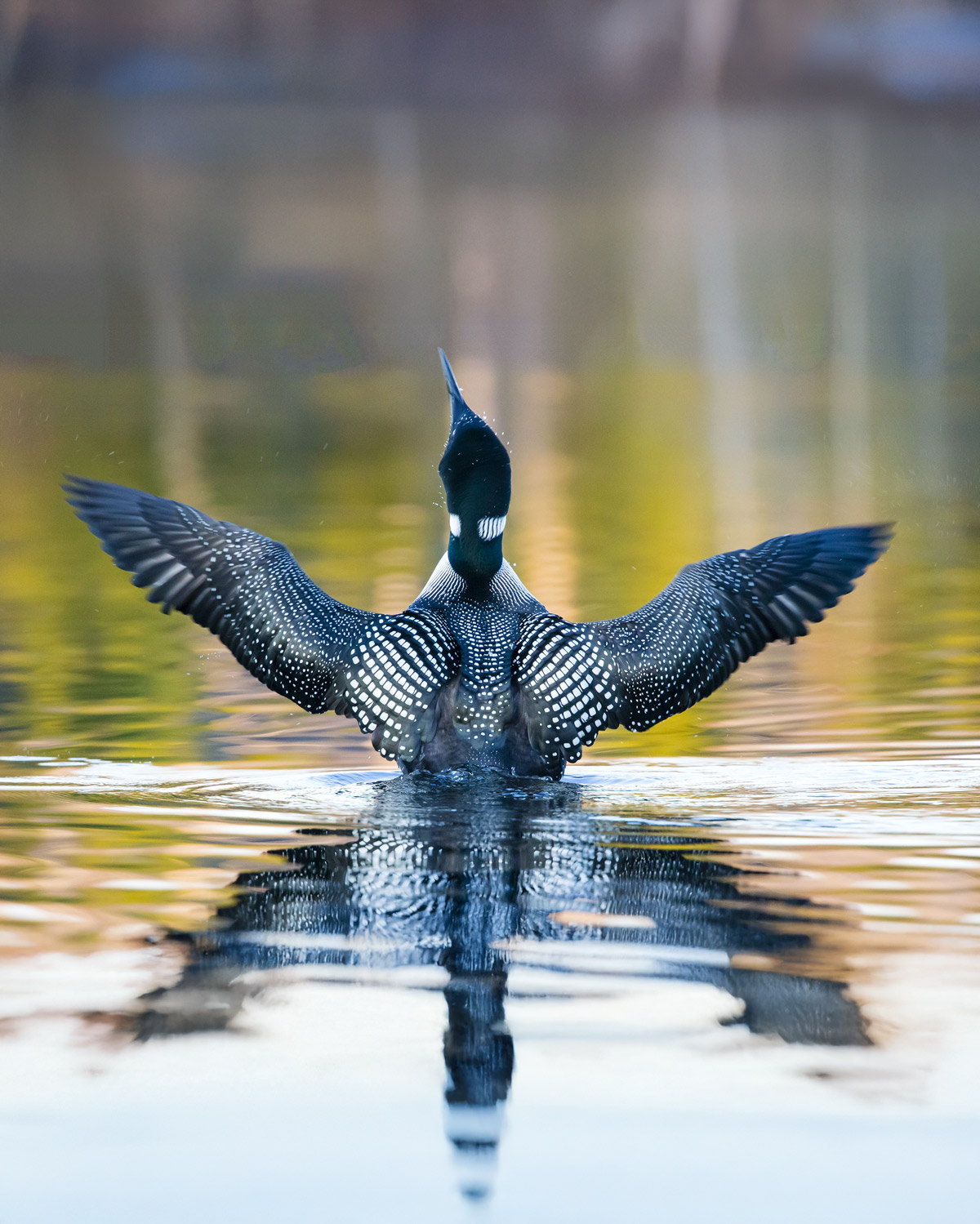
- Wing Exercises: You will often see them flapping their wings vigorously on the surface. This isn't just for drying off; they are building the massive pectoral muscles required for flight.
- The Runway: Unlike most birds, loons need a long "runway" (up to a quarter-mile) to take off from the water. August is spent practicing these long, splashing taxi runs.
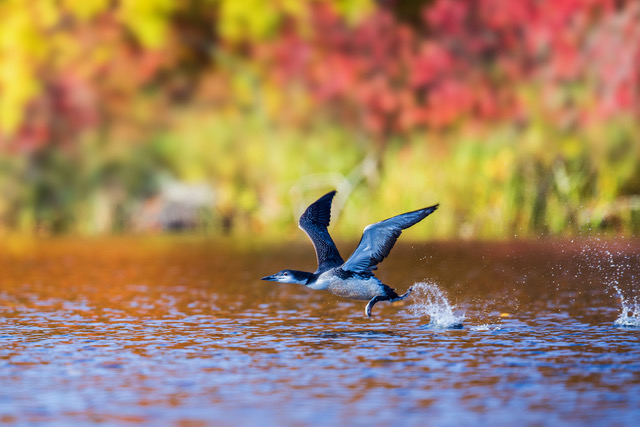
- Staggered Migration: Interestingly, the adults usually leave first, the males and then the females. The juveniles stay behind for several more weeks to continue feeding and growing.
- The First Flight: In October before the lakes freeze, the young loons take off for their first-ever migration.
- The Long Stay: Once they reach the Gulf of Mexico or the Atlantic, these young loons will stay on the ocean for 2–3 years before they are mature enough to return to the Northwoods.
Protecting Loons On The Water
Everyone who lives on or visits the Gunflint Trail can help protect loons by:
- Giving loons plenty of space, especially near nests and chicks.
- Manage Your Wake: Keep speeds slow near nesting sites to minimize wakes that can wash over nests or separate chicks from parents.
- Reel in Temporarily: If loons appear interested in your bait, pull in your fishing lines until they move on or relocate to a different spot.
- Never Cast Toward Nests: Avoid casting near natural nests or artificial nesting platforms.
- Lead-Free Tackle: Switching to non-lead sinkers and jigs is vital, as a loon that swallows lead tackle will typically die within 2–3 weeks.
- Proper Disposal: Never discard broken fishing line or lures in the water or on the shore, as it creates a lethal entanglement trap and can lead to lead poisoning.
- Do Not Feed: Never feed loons; this teaches them to chase baited hooks, which endangers their lives. Feeding loons can also encourage them to approach boats which could result in impact injuries.
Lead poisoning remains one of the leading causes of loon mortality. Switching to non-lead alternatives is one of the simplest and most effective actions you can take.
Get The Lead Out
The Chik-Wauk Loon Program supports education and outreach efforts to reduce the use of lead fishing tackle on Gunflint Trail lakes. Lead poisoning is estimated to cause 25% of adult common loon deaths, nationally (via the Minnesota Pollution Control Agency).
Through partnerships, informational materials, and lead tackle exchange efforts, the program aims to make it easier for anglers to understand why lead-free options matter — and how to make the switch.
Partnerships & Stewardship
Protecting loons requires collaboration. The Chik-Wauk Loon Program works alongside lake associations, conservation organizations, and state and federal agencies to align messaging, share resources, and support long-term conservation efforts along the Gunflint Trail.






Visit Chik-Wauk
Learn more about loons, Northwoods ecology, and the cultural and natural history of the Gunflint Trail by visiting Chik-Wauk Museum & Nature Center.
Exhibits, programs, and events throughout the season connect visitors of all ages to this remarkable place.
Chik-Wauk is open from Memorial Day to Mid October.
Get Involved
Learn How To Recognize Loon Behavior
Share Your Loon Observations
Support Monitoring & Education Efforts
Help Protect Loons On The Water
Donate
The Ask: Your Legacy on the Trail
Fund The Science
Support monitoring equipment and data collection.
Fund the Education
Help reach thousands of visitors at Chik-Wauk Museum & Nature Center.
Fund The Future
Ensure the Voice of the North never goes silent.
Contact

Support
Learn more about how you can support the work and get involved.
Connect
Photo Credit
All loon photography featured on this site is courtesy of Mark Ellis, whose work helps bring the story of the Gunflint Trail’s loons to life.
All loon photography featured on this site is courtesy of Mark Ellis, whose work helps bring the story of the Gunflint Trail’s loons to life.
© 2026 Chik-Wauk Loon Program | Privacy Policy | Cookie Policy | Designed by Sweetwater Design Co